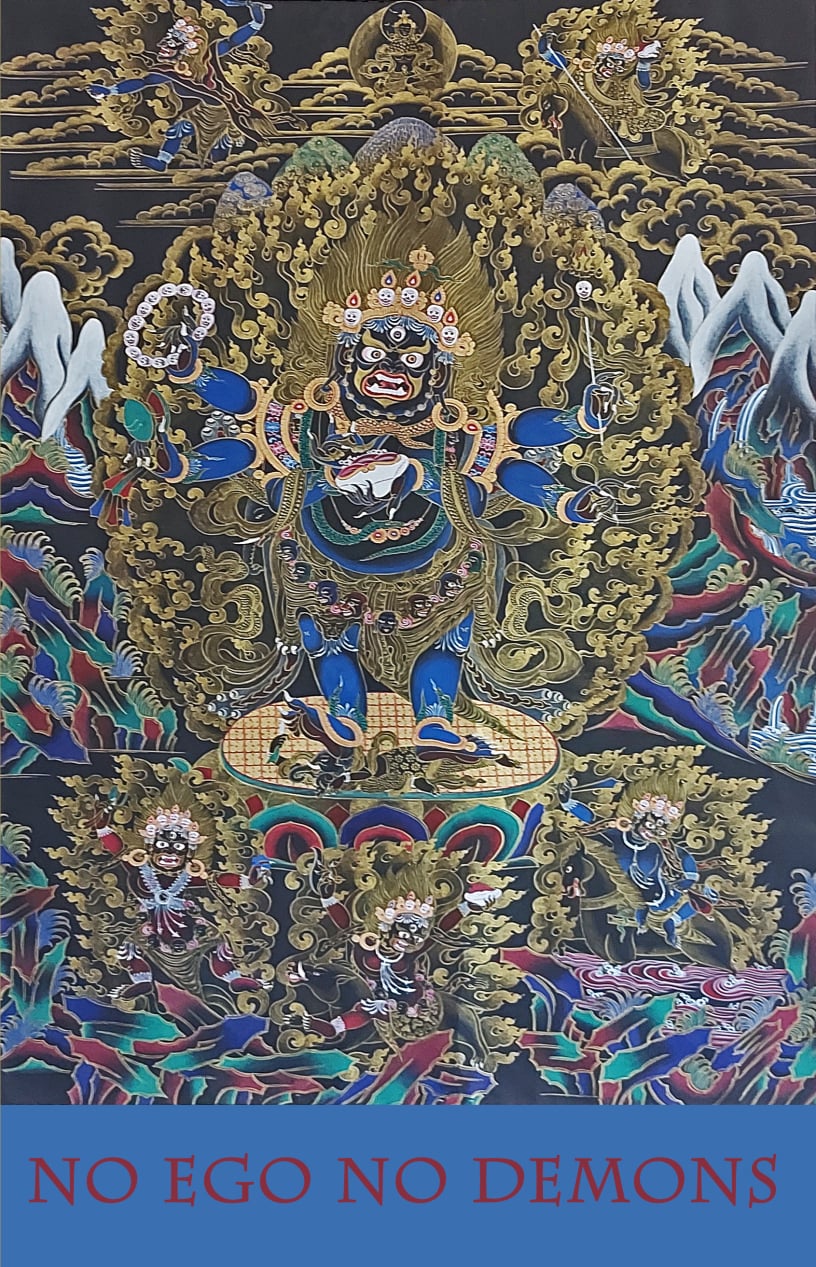
No Ego No Demons investigates how a functional sense of self becomes an ego-prison when ‘I’ and ‘mine’ are treated as fixed, self-existing identities. The problem is not the practical ego or conceptual distinction as such, but fixation, appropriation, and self-grasping, which organize consciousness around a false center and generate the ‘demons’ of affliction, projection, and compulsive reaction.
The book begins with consciousness, perception and sensation, ego-formation, Yogācāra’s eight consciousnesses, and the two obscurations. It examines how habitual tendencies, conceptual designation, and emotional reactivity sustain the painscape of ‘me’ and ‘mine’ and conceal a deeper, non-conceptual register of awareness.
It then follows egoic conditioning into action, karma, rebirth, worldly choice, and cyclic existence. The analysis connects the six realms with characteristic patterns of anger, craving, ignorance, pride, jealousy, and distraction, showing how these conditions are perpetuated through identification and reactive action.
The concluding movement is practical. Thoughts turning the mind, mindfulness, Machig Labdrön’s maxim ‘no ego, no demons,’ attention to the present, and the disciplined use of the ego as skillful means loosen fixation without abolishing the person.
Inspired by Dzogchen but not itself a treatise on Dzogchen, the book points toward an awake life in which thoughts and emotions arise without binding the mind : a life at ease.

No Ego No Demons
No Ego No Demons